Page 1
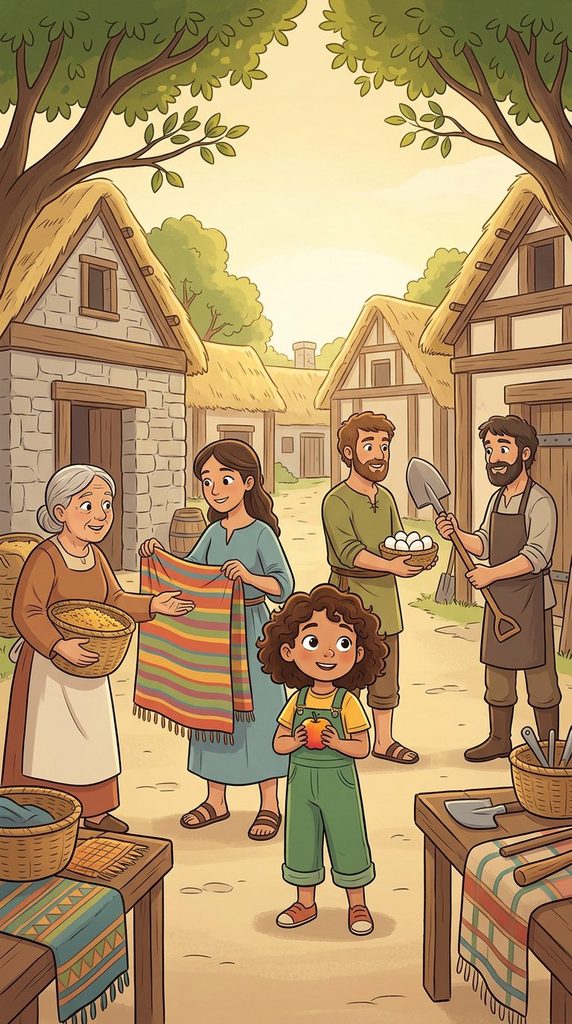
Long ago, people often traded goods directly, such as grain for cloth or eggs for tools.
很久以前,人们常常直接用东西换东西,比如用粮食换布,用鸡蛋换工具。Long ago, people often traded goods directly, such as grain for cloth or eggs for tools.
很久以前,人们常常直接用东西换东西,比如用粮食换布,用鸡蛋换工具。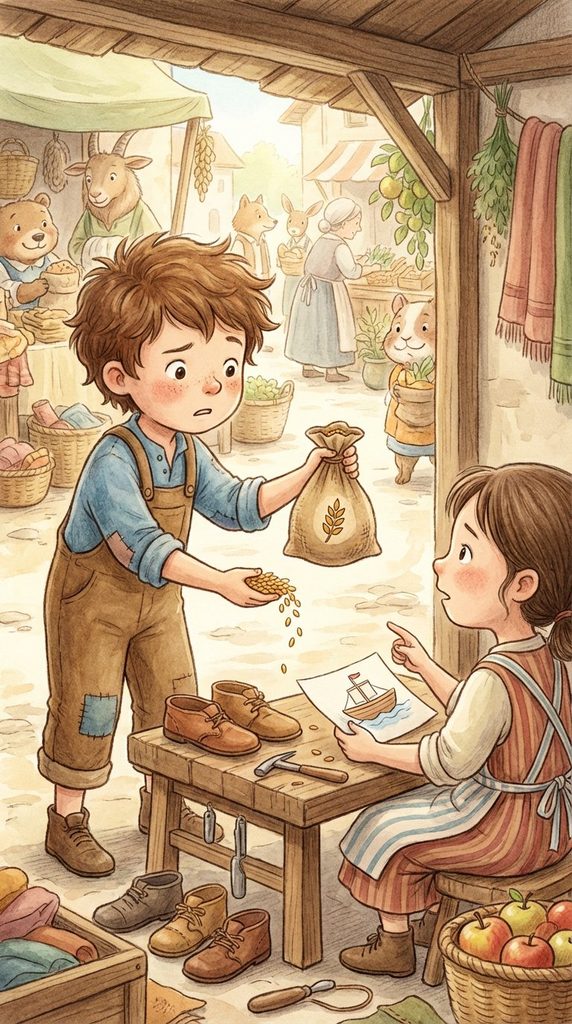
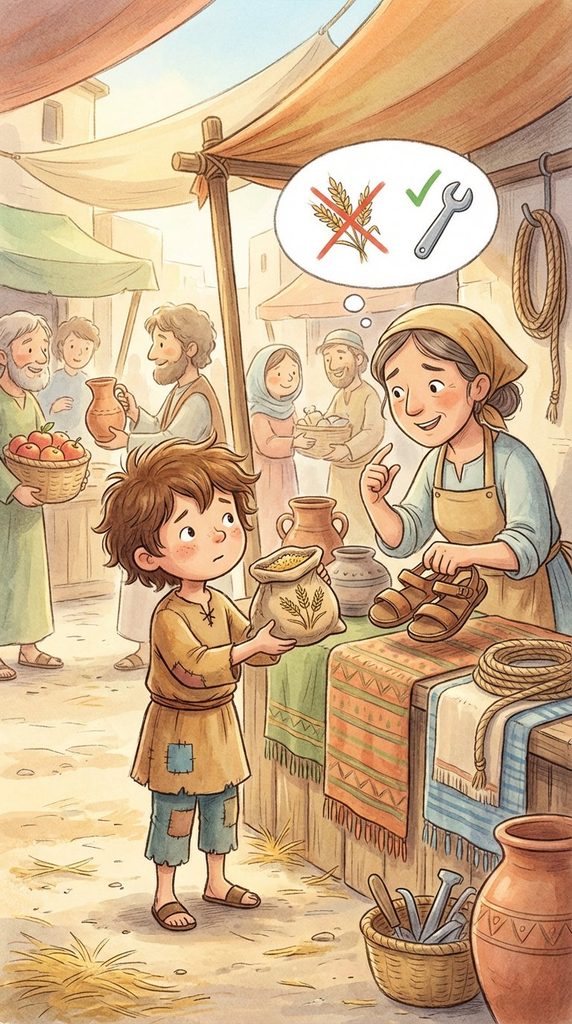
Barter could fail when one person had grain and wanted shoes, but the shoemaker did not need grain at that moment, which made direct trade awkward.
如果一个人手里有粮食想换鞋子,可做鞋的人当时并不需要粮食,直接交换就会卡住,这正是以物换物常常麻烦的地方。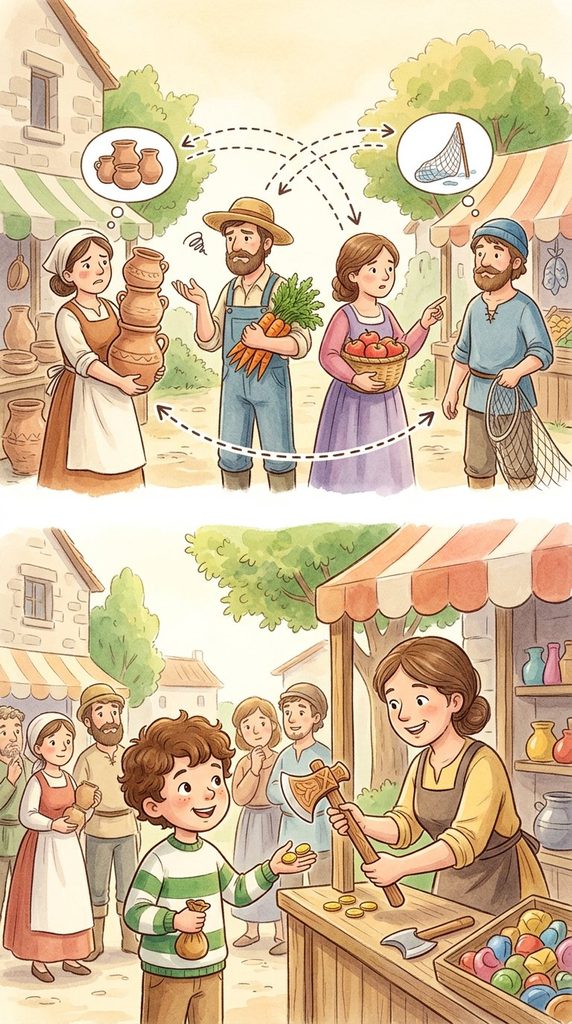
Money became useful because it gave people a shared way to measure value and exchange many different things more easily.
钱之所以有用,是因为它给了大家一个共同衡量价值的方法,让不同东西的交换变得更容易。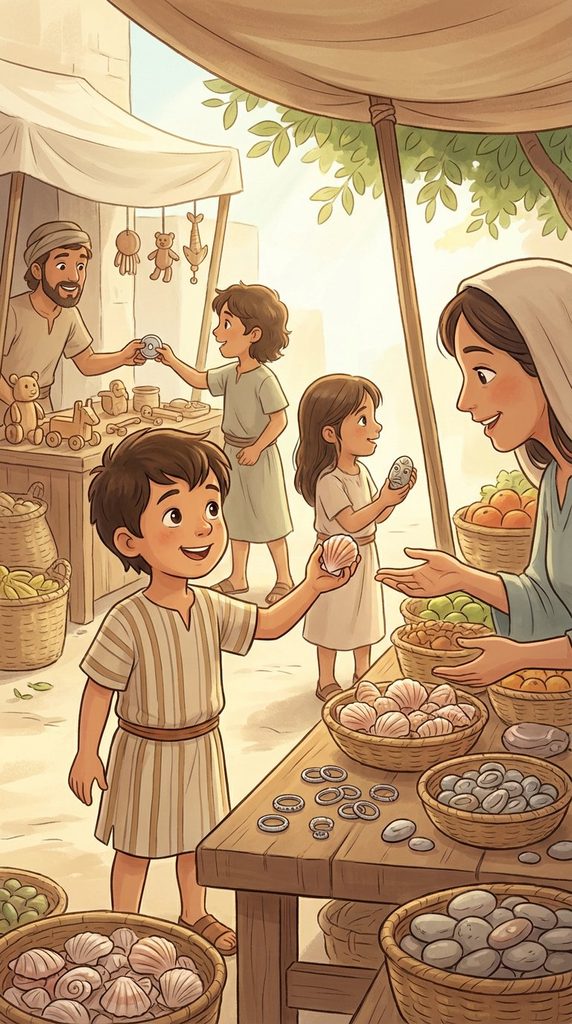
At first, different places used shells, metal, or other objects that many people agreed could stand for value.
一开始,不同地方会用贝壳、金属或别的物品来代表价值,只要很多人都认可就能使用。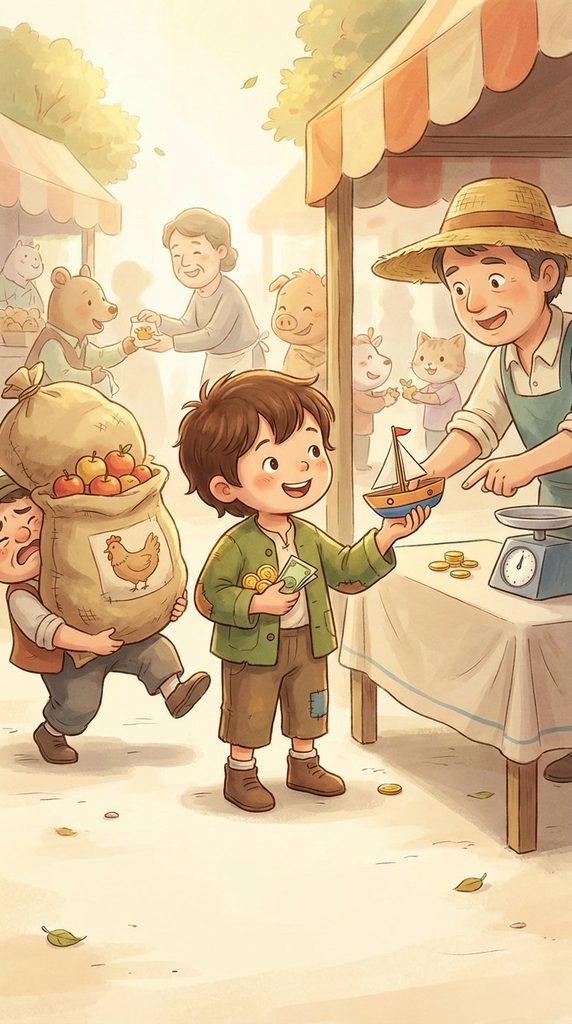
Coins and paper money later made trade easier, because they were easier to count, carry, and compare than bags of goods.
后来出现的硬币和纸币让交易更方便,因为它们比一大堆实物更容易计算、携带和比较。